
How Snow and Salt Damage Your Floors (And How to Fix It)
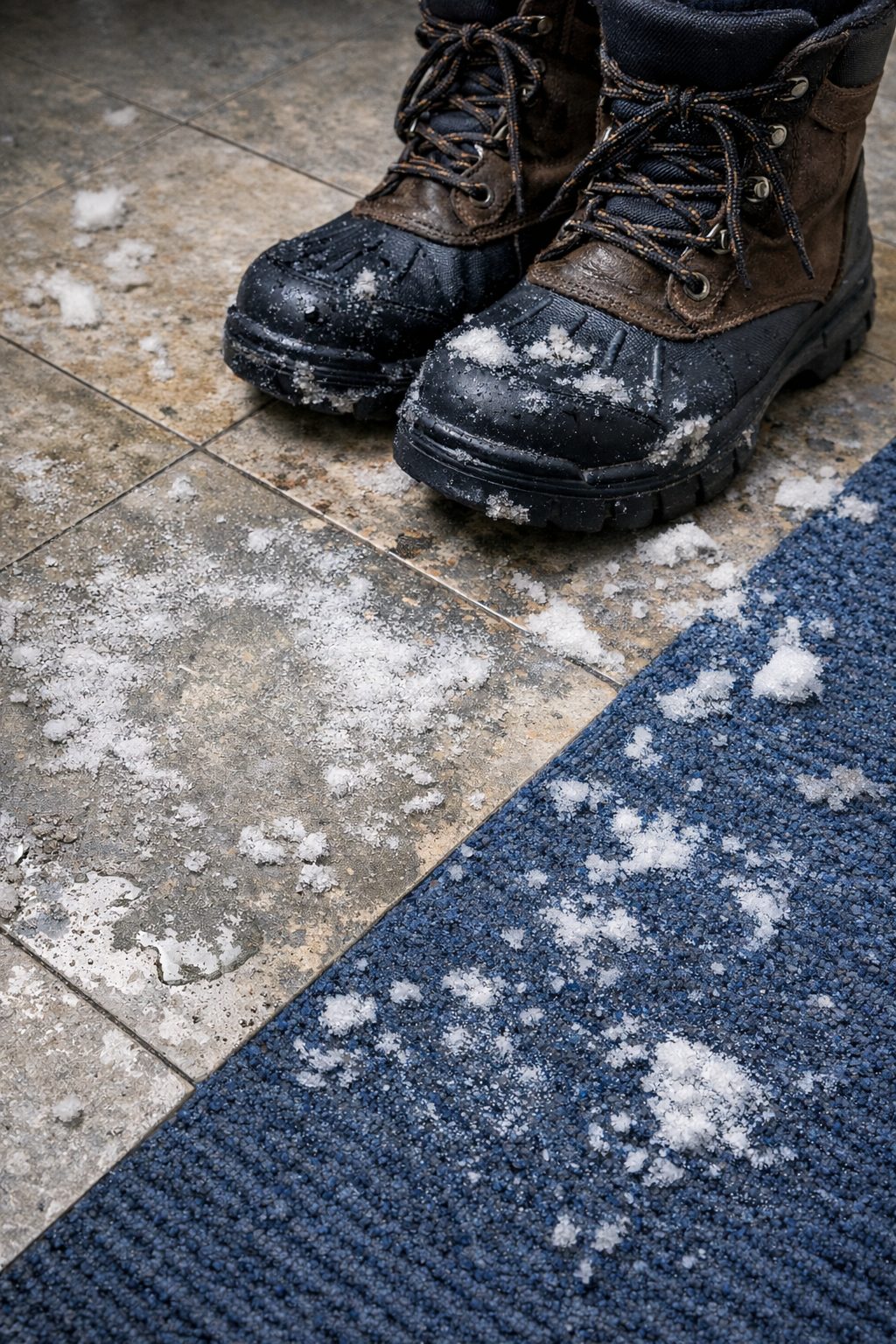
If you run a business in Rhode Island, Massachusetts, or Connecticut, winter brings more than cold weather — it brings snow, slush, and road salt tracked straight into your building.
What many business owners don’t realize is that salt is one of the most destructive substances your floors face all year. Left untreated, it can permanently damage carpets, stain tile, and shorten the lifespan of VCT floors.
Here’s what snow and salt actually do to your floors — and how to fix the damage before it gets expensive.
How Salt Gets Into Your Building
Even if your entryways look clean, salt travels far.
It gets carried in through:
- Shoes and boots
- Entry mats that aren’t cleaned often enough
- Maintenance equipment
- Delivery traffic
Within days, salt spreads across hallways, offices, and common areas.
The Real Damage Salt Causes
1. Permanent Stains on Tile and Grout
Salt leaves behind a chalky white residue that seeps into porous surfaces. Over time, it dulls tile finishes and discolors grout lines, making floors look older than they are.
2. Carpet Fiber Breakdown
Salt crystals act like tiny blades inside carpet fibers. Every step grinds them deeper, causing:
- Fraying
- Flattened texture
- Embedded dirt buildup
Once fibers are damaged, deep cleaning can’t fully restore them.
3. VCT Floor Deterioration
Vinyl composition tile (VCT) is especially vulnerable.
Salt eats through protective wax layers, leading to:
- Dull patches
- Uneven shine
- Faster wear patterns
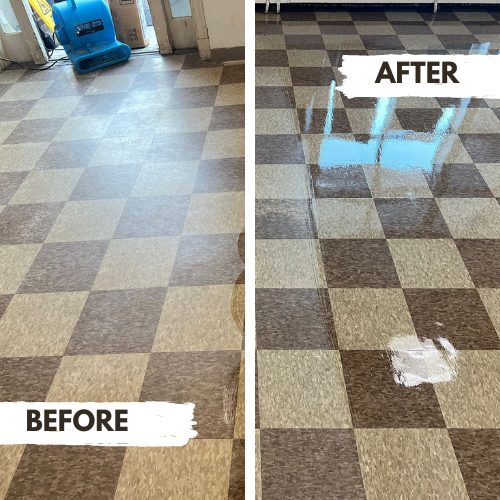
Without proper maintenance, floors may need stripping and rewaxing much sooner than expected.
4. Increased Slip Hazards
Salt residue attracts moisture. When mixed with melted snow, it creates a slick film that increases slip-and-fall risk — especially in high-traffic areas.
For many businesses, this becomes a liability issue, not just a cosmetic one.
Why Regular Mopping Isn’t Enough
Most in-house cleaning routines aren’t designed for winter conditions.
Standard mopping often:
- Spreads salt instead of removing it
- Leaves residue behind
- Uses the wrong chemicals for floor types
Winter floor care requires different products and techniques than the rest of the year.
How to Protect Your Floors During Winter
Use Proper Entry Matting
A layered mat system helps trap salt before it spreads:
- Scraper mats outside
- Absorbent mats inside entryways
- Regular mat rotation and cleaning
Increase Cleaning Frequency
During peak snow months, floors may need:
- More frequent mopping
- Spot carpet extraction
- Entryway deep cleaning
Waiting too long allows salt to settle deep into surfaces.
Maintain Floor Finish (Especially VCT)
A strong wax layer acts as a barrier between salt and your flooring.
Professional floor care can:
- Restore protective coatings
- Remove embedded salt residue
- Extend floor lifespan
When to Schedule Professional Floor Care
If you’re noticing:
- White haze on floors
- Dull or uneven shine
- Persistent salt stains
- Faster floor wear than usual
It’s usually a sign your floors need more than routine cleaning.
Late winter and early spring are ideal times for:
- Deep floor cleaning
- Carpet extraction
- Strip and wax services
Addressing salt damage early can prevent costly replacements later.
Protect Your Floors Before Spring
New England winters are tough on commercial spaces — but most salt damage is preventable with the right care.
If your floors have taken a beating this winter, a professional deep clean can restore their appearance and protect them long-term.
FPS Cleaning Services provides commercial floor care across Rhode Island, Massachusetts, and Connecticut. From winter recovery cleanings to full strip-and-wax services, we help businesses protect their floors year-round.
👉 Request a quote today and get your floors ready for spring.
Need this handled at your facility?
FPS Cleaning Services keeps commercial spaces across RI, MA & CT spotless with our own trained employees. Get a free walkthrough and quote.
![Stripping and Waxing Floors in Rhode Island: A Complete Guide for Commercial Properties [2025]](/assets/post-08-DRRfI3iE.jpg)
Get your free quote
Tell us about your space — we respond within one business day.